Wittenberg Day Trip at a Glance: Quick Facts
Pressed for time? Here are the essential details for planning your journey back to the 16th century.
| Factor | Details |
|---|---|
| Distance from Berlin | Approximately 110 km (68 miles) southwest of Berlin |
| Travel Time | 40-50 minutes (High-Speed Train), 1.5-2 hours (Car) |
| Best Way to Go | The high-speed ICE train from Berlin Hauptbahnhof (Hbf) |
| Estimated Cost (per person) | €65 – €195 (including transport, food, and entry fees) |
| Best Time to Go in 2026 | Spring (April-June) & Autumn (September-October) for pleasant weather |
| Main Sights | Castle Church (Theses Door), Luther House Museum, Market Square |
How to Get to Wittenberg from Berlin
Getting to the heart of the Reformation from Germany’s modern capital is surprisingly simple. While driving is an option, the train is hands-down the best choice for speed, comfort, and convenience, allowing you to relax and arrive ready to explore.
Day Trip from Berlin to Wittenberg by Train (The Best Way)
The German rail system, Deutsche Bahn (DB), makes this trip an absolute breeze. You’ll be whisked from the urban energy of Berlin to the historic tranquility of Wittenberg in under an hour.
- Train Type: For the fastest journey, book an ICE (Intercity-Express) train. These sleek, high-speed trains cover the distance in a remarkable 40-50 minutes. Slower regional trains take around 1.5 hours but can be a good budget option if you have the Deutschland-Ticket (€49/month), which covers regional transport but not the ICE.
- Stations: Depart from Berlin Hauptbahnhof (Hbf) and arrive at Lutherstadt Wittenberg Hauptbahnhof. From the Wittenberg station, it’s a pleasant and straightforward 10-15 minute walk directly to the historic old town.
- Booking & Cost: Book your tickets in advance on the Deutsche Bahn website or DB Navigator app for the best prices. Look for “Sparpreis” (saver fares), which can be as low as €20 one way. Last-minute or flexible “Flexpreis” tickets can cost €50 or more each way.
Day Trip from Berlin to Wittenberg by Car
If you prefer the freedom of driving, the journey is also quite manageable. The primary route is via the A9 autobahn, which takes about 1.5 to 2 hours without major delays. However, be mindful of traffic, especially when leaving and returning to Berlin during peak hours. Parking in the compact historic center is not recommended. Instead, use one of the designated paid parking garages (Parkhaus) on the edge of the old town, like Parkhaus am Elbhafen or Parkhaus an der Wallstraße. Expect to pay around €1-€2 per hour.
| Feature | By Train (ICE) | By Car |
|---|---|---|
| Time | ~45 minutes | ~1.5 – 2 hours |
| Cost (Roundtrip) | €40 – €100 | Fuel + Parking (~€30+) |
| Convenience | Very High (relax, no traffic) | Moderate (traffic, parking) |
| Winner | Train |
Top 5 Must-See Attractions in Wittenberg
Wittenberg’s old town is a compact, open-air museum designated as a UNESCO World Heritage site. Every corner tells a story of the monumental changes that swept across Europe five centuries ago. Here are the essential sites you cannot miss.

-
The Castle Church (Schlosskirche) and the Theses Door
This is it—the very spot where the Protestant Reformation began. It was on the doors of this church that Martin Luther allegedly posted his 95 Theses in 1517, protesting the church’s practices. While the original wooden doors were lost in a fire, the imposing 19th-century bronze replacements are inscribed with the full text of the theses. Inside, you’ll find the final resting places of both Luther and his friend and fellow reformer, Philipp Melanchthon.
Don’t Miss: For a small fee of around €4, you can climb the church tower. The panoramic view over Wittenberg’s rooftops and the Elbe River is absolutely worth the effort.
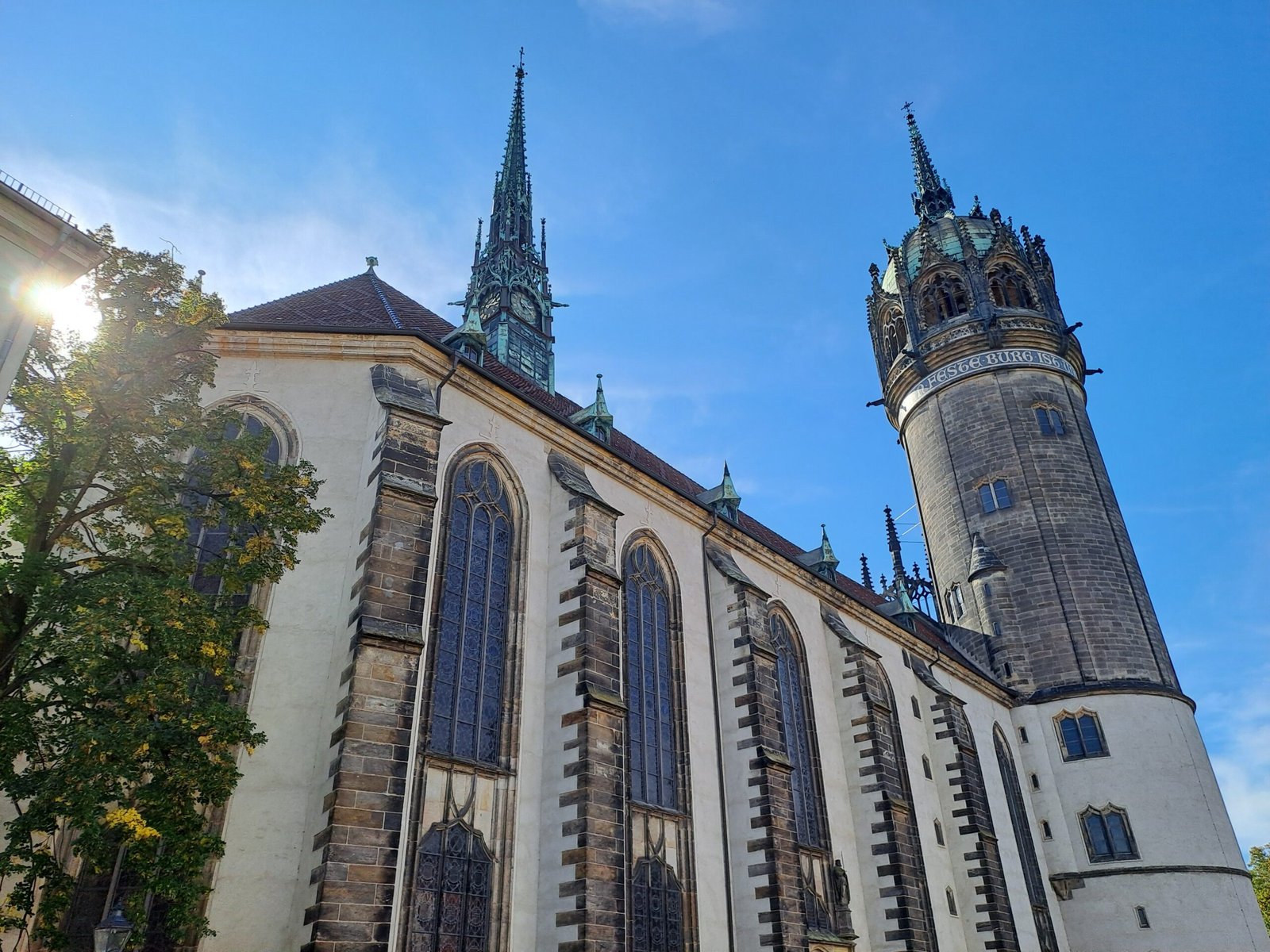
Site of the famous Theses Door where the Reformation began. — Photo via Wikimedia Commons -
The Luther House (Lutherhaus)
Step into the life of the Reformation’s central figure at his former home. Once an Augustinian monastery, this building became the Luther family residence and is now the world’s largest museum dedicated to the Reformation. The exhibits are world-class, featuring incredible artifacts, manuscripts, and art. The highlight is the perfectly preserved “Lutherstube,” the very study where Luther worked on his revolutionary translation of the Bible.
Entry costs around €14 for an adult, a price well worth it for the historical depth.
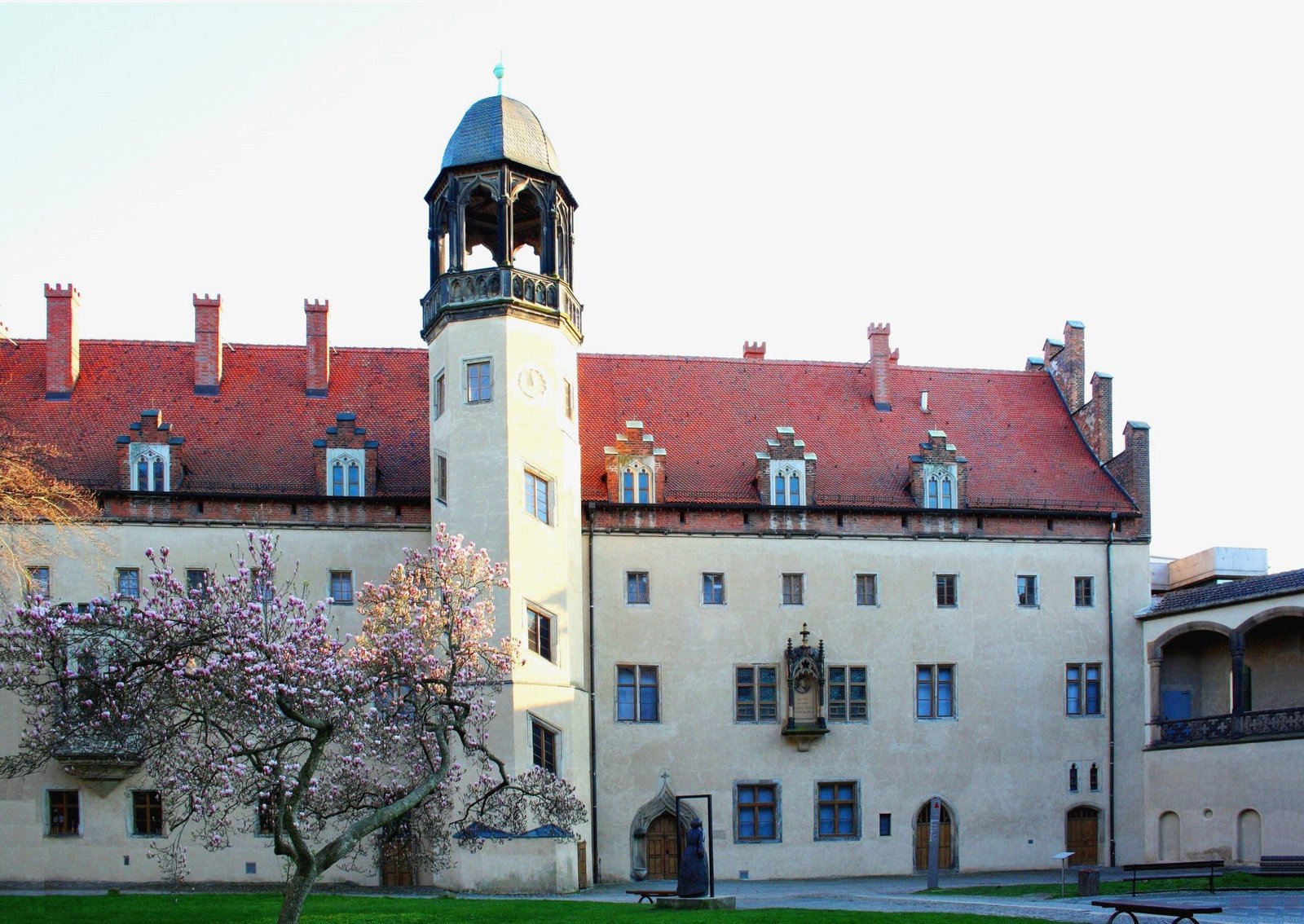
Martin Luther’s former home, now the world’s largest Reformation museum. — Photo via Wikimedia Commons -
St. Mary’s Church (Stadtkirche St. Marien)
Often called the “Mother Church of the Reformation,” St. Mary’s was the main civic church and Martin Luther’s personal pulpit. It was here that he preached hundreds of sermons, married Katharina von Bora, and baptized his six children. The church’s most significant treasure is the “Reformation Altarpiece,” a masterpiece by Lucas Cranach the Elder that depicts key reformers in biblical scenes.
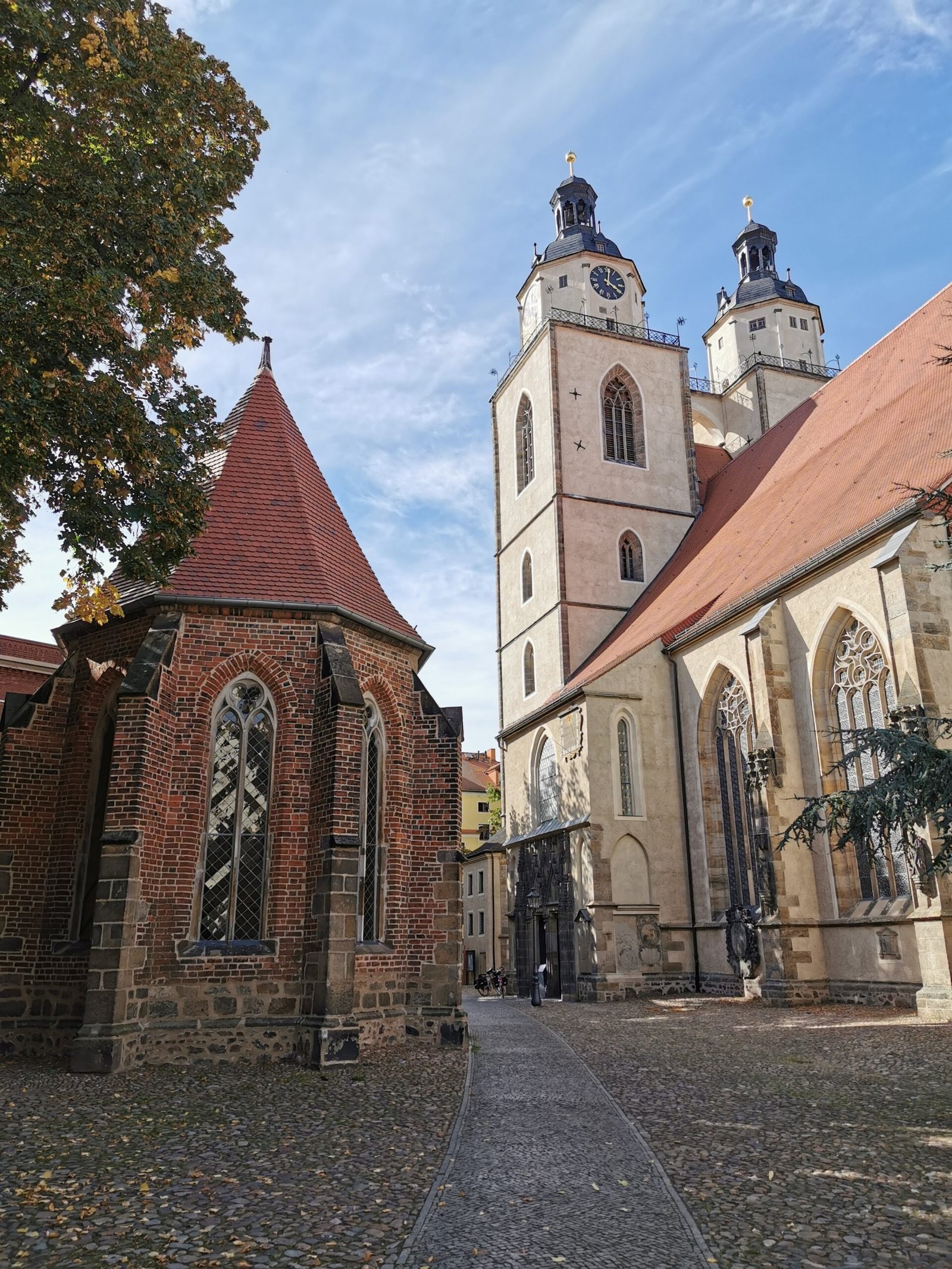
The ‘Mother Church of the Reformation’ where Martin Luther preached. — Photo via Wikimedia Commons -
The Market Square (Marktplatz)
The vibrant heart of Wittenberg, the Market Square is a feast for the eyes. Dominated by the magnificent Renaissance Town Hall (Rathaus), the square is framed by beautifully restored burgher houses. At its center stand the iconic 19th-century bronze monuments to the town’s two heroes: a defiant Martin Luther and a scholarly Philipp Melanchthon. It’s the perfect spot to take photos, grab a coffee, and soak in the historic atmosphere.
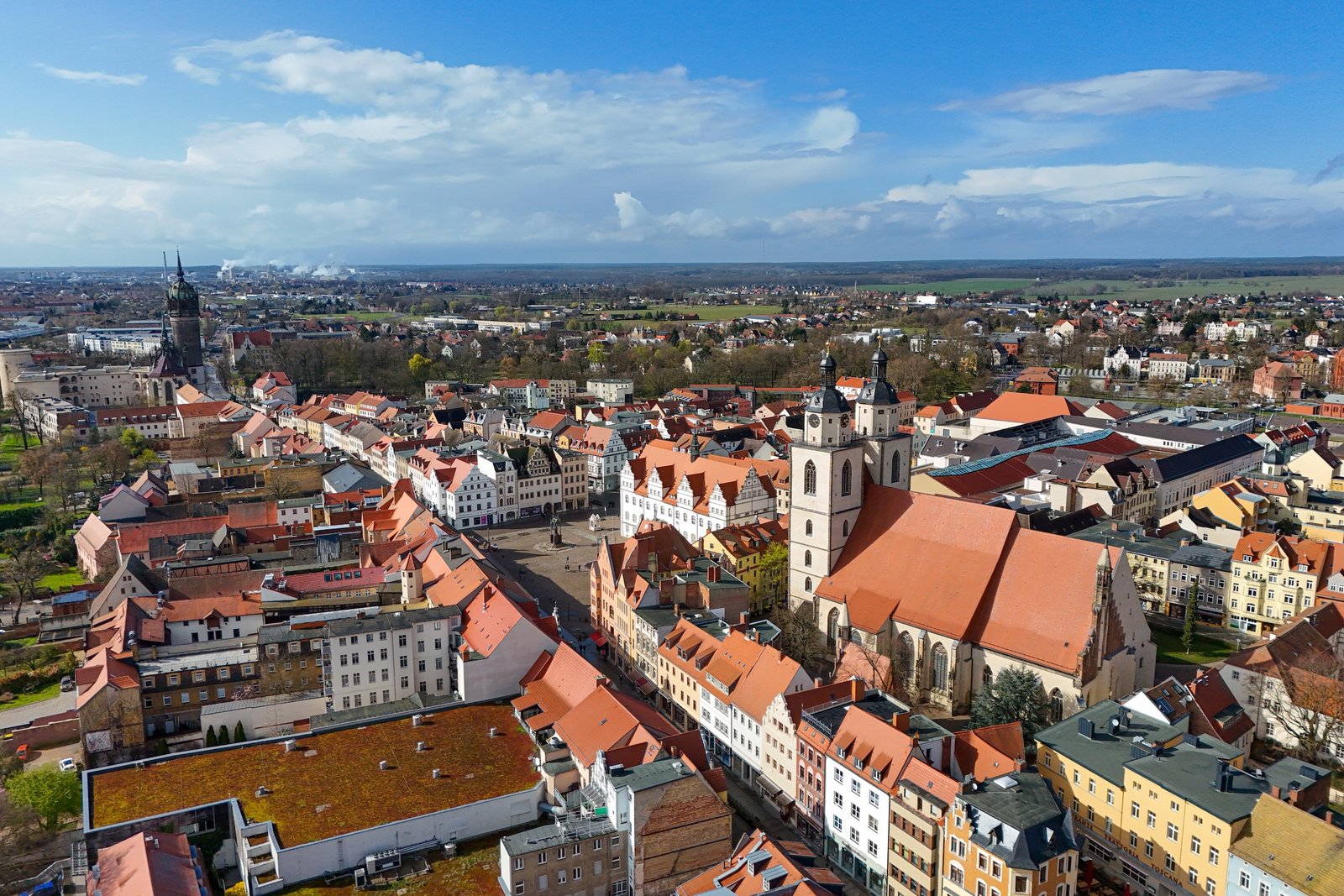
The historic heart of the city with its iconic Luther monument. — Photo via Wikimedia Commons -
The Cranach Courtyards (Cranach-Höfe)
Discover the charming world of Lucas Cranach the Elder and Younger, the court painters who became the artists of the Reformation. These two beautifully preserved historic courtyards were their homes and workshops. Today, you can wander through the courtyards, which now house small galleries, artisan shops, and an art school. It’s a peaceful and atmospheric glimpse into the daily life of the 16th century.
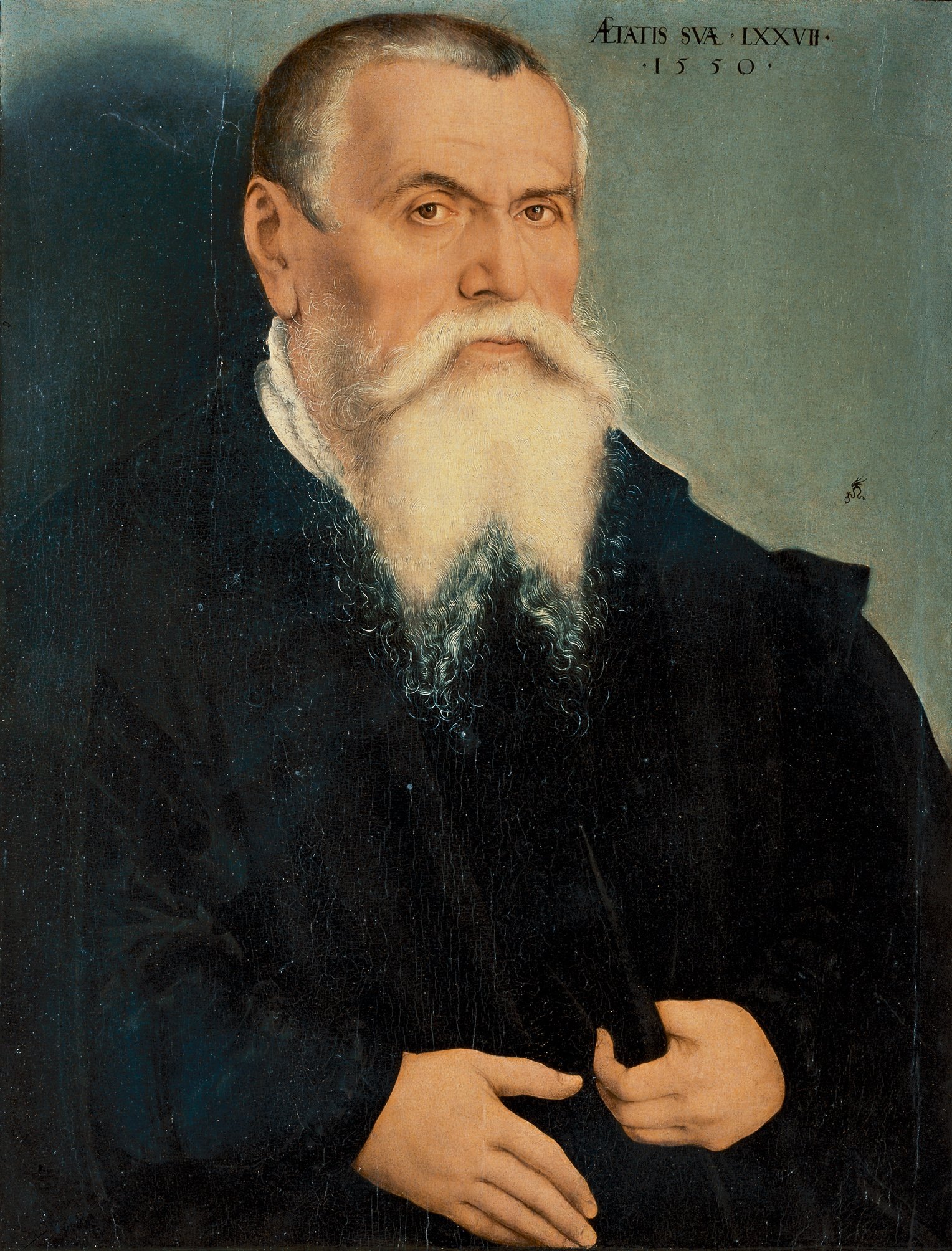
The historic homes and workshops of the famous Cranach painter family. — Photo via Wikimedia Commons
Sample Itinerary: A Perfect Day in Wittenberg
This schedule allows you to see all the highlights at a comfortable pace, with plenty of time for food and photos.
- 9:00 AM: Catch a morning ICE train from Berlin Hauptbahnhof.
- 9:50 AM: Arrive at Lutherstadt Wittenberg Hbf. Take the scenic 15-minute walk towards the Old Town.
- 10:15 AM – 12:00 PM: Begin your historical journey at the far end of town at the Castle Church. See the Theses Door and climb the tower for breathtaking views.
- 12:00 PM – 1:30 PM: Walk back along the main street and find a traditional German restaurant near the Market Square for a hearty lunch.
- 1:30 PM – 3:30 PM: Dedicate a solid block of time to the magnificent Luther House museum.
- 3:30 PM – 4:30 PM: Stroll through the Market Square, visit St. Mary’s Church, and explore the artistic atmosphere of the Cranach Courtyards.
- 4:30 PM – 5:30 PM: Time for a classic German tradition: Kaffee und Kuchen (coffee and cake) at a café. Or, browse the local shops for a unique souvenir.
- 6:00 PM: Make your way back to the train station for a swift and easy journey back to Berlin.
Where to Eat in Wittenberg: From Bratwurst to Brauhaus
Wittenberg offers a range of dining options that cater to every taste and budget, with a focus on hearty, traditional German and Saxon-Anhalt cuisine.
For a Quick & Authentic Bite (€)
You can’t go wrong with a classic German Bratwurst from a stand on the market square. It’s fast, delicious, and budget-friendly, letting you maximize your sightseeing time.
For a Traditional Meal (€€)
For the full experience, head to a local Gasthaus or Brauhaus. A top recommendation is the Brauhaus Wittenberg, where you can enjoy regional dishes like schnitzel or pork knuckle alongside fresh, locally brewed beer in a historic setting.
For Coffee and Cake (€€)
Join the locals in the afternoon tradition of Kaffee und Kuchen. Find a charming café with outdoor seating on the Marktplatz to relax, people-watch, and enjoy a delicious slice of German cake.
Insider Tips for Your Wittenberg Visit
- Wear Comfortable Shoes: The historic old town is full of cobblestone streets. Your feet will thank you!
- Buy a Combo Ticket: If you plan to visit multiple museums, ask at the tourist information office about combination tickets like the WelterbeCard, which can offer significant savings.
- Check Festival Dates in 2026: Be aware of major annual events like “Luther’s Wedding” (second weekend in June) and Reformation Day (October 31st). The town is incredibly festive but also very crowded.
- Visit the Tourist Office: Located conveniently on the main street between the Castle Church and the Market Square, it’s a great resource for maps, tickets, and expert advice.
- Bring Some Cash: While most restaurants and museums accept credit cards, smaller cafés, market stalls, or souvenir shops may be cash-only.
Planning Your Visit in 2026
A little planning goes a long way. The best seasons to visit are Spring (April-June) and Autumn (September-October), when the weather is mild and the crowds are smaller than in the peak summer months. Weekdays are generally quieter than weekends. In terms of accessibility, the main museums like Luther House are largely wheelchair accessible, but the cobblestone streets can be challenging. It’s always a good idea to check the official websites of individual attractions for the most current accessibility information.
What to Pack for Your Wittenberg Day Trip
Pack light and smart for a comfortable and enjoyable day of exploration.
- Comfortable walking shoes are non-negotiable.
- A camera and/or smartphone to capture the historic beauty.
- A portable power bank to keep your devices charged.
- A reusable water bottle to stay hydrated.
- A light jacket or a compact umbrella, as German weather can be unpredictable.
- Your train tickets (digital on your phone is easiest).
Wittenberg Day Trip Budget Breakdown
Here’s a sample breakdown of potential costs per person, helping you plan whether you’re on a tight budget or looking to indulge.
| Expense | Budget Option | Mid-Range Option |
|---|---|---|
| Train (Roundtrip) | €40 – €60 (booked in advance) | €60 – €100 (more flexible) |
| Attractions | €4 (Church Tower only) | €25+ (Combo museum tickets) |
| Food & Drink | €15 – €25 (Bratwurst & water) | €30 – €50 (Restaurant lunch & coffee) |
| Souvenirs/Other | €5 – €10 | €20+ |
| TOTAL PER PERSON | €64 – €99 | €135 – €195 |
Frequently Asked Questions (FAQ)
Is a day trip from Berlin to Wittenberg worth it?
Absolutely! If you have even a passing interest in European history, art, or culture, this trip is a must. The sheer historical importance of this small town is staggering. Its beautifully preserved old town is compact and easily walkable, making it the perfect destination for a single day of exploration. It is undeniably one of the most rewarding and easy day trips from Berlin.
Where is Wittenberg, Germany on a map?
Lutherstadt Wittenberg is located in the eastern German state of Saxony-Anhalt. It sits on the banks of the River Elbe, approximately 110 kilometers (68 miles) southwest of Berlin and about 70 kilometers (43 miles) northeast of Leipzig.
What are other popular day trips from Berlin?
Besides Wittenberg, some of the most popular day trips around Berlin include Potsdam for its stunning Prussian palaces and manicured gardens, and Dresden for its world-class art museums and beautifully reconstructed Baroque old town. The distance from Berlin to Dresden is about 200 km, and the Berlin to Dresden train time is just under 2 hours by EuroCity (EC) train, making it another fantastic, though slightly longer, day trip.
How many days is the tour of Flanders?
This is a great question about a different but wonderful European region! The “Tour of Flanders” is actually a famous one-day professional cycling race held in the Flanders region of Belgium. For a tourist looking to explore the historic cities of Flanders, such as Bruges, Ghent, and Antwerp, a trip of 3 to 5 days is typically recommended. It is not a day trip from Berlin.
TL;DR: Your Wittenberg Day Trip
Wittenberg is a fantastic, easy day trip from Berlin. Take the 45-minute ICE train. Once there, see the Castle Church (Theses Door), the Luther House Museum, and the Market Square. Budget around €100 per person for a great day. Wear comfy shoes and book your train tickets early for the best price. It’s an unforgettable journey into one of history’s most pivotal moments.